
Sell Lemons Beginner Guide: Money Fast, Upgrades & First Route
Quick Answer
The best beginner route is automation first, newest activity second, events third, and sewer routes after passive income is stable. If you are still manually clicking every few seconds, you are not ready to spend a long run inside the maze.
The fastest beginner route in Sell Lemons is not to click forever. Your first goal is automation, your second goal is the newest income source, and your third goal is using events and badge routes once your stand can keep earning without you.
Source note: This guide uses official game information, in-game progression and badge signals, community questions, gameplay video review, and screenshot review.
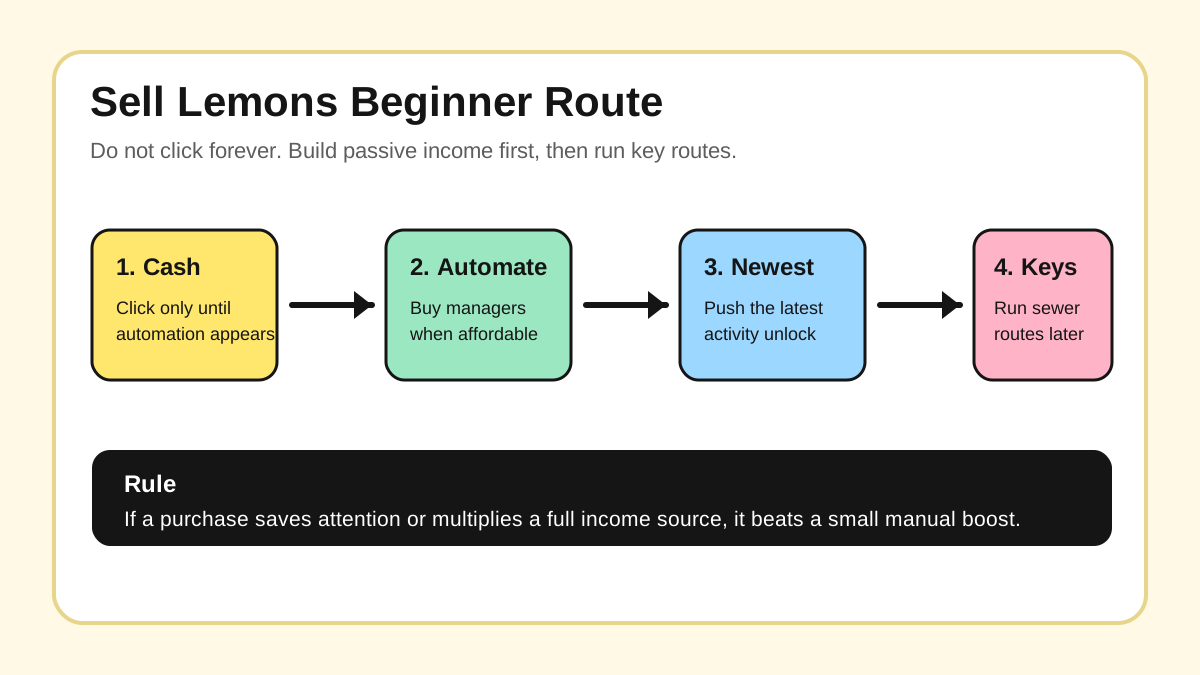
Quick Route
First cash
Keep the stand moving until the first useful automation appears.
Automation
Buy manager upgrades as soon as they become affordable.
Newest activity
After unlocking Lemon Dash, Depot, Trading, or a later system, push that newest source first.
Events
Stop routine clicking when a high-value event appears.
Keys
Start sewer routes after you have enough passive income to ignore the stand for a few minutes.
Best Beginner Priorities
A good Sell Lemons start has one main goal: turn manual attention into passive cash. Every upgrade should be judged by what it changes. If it only makes one click slightly better, it is useful but not urgent. If it automates a process, multiplies a full source, or lets you work on another objective while money keeps coming in, it should move up the list.
The reason newer activities matter is scaling. Early stand income gets you started, but later systems usually become the bigger engine. When you unlock Lemon Dash, Depot, Trading, or another activity, do not keep spending as if the first stand is still your only business. Shift attention toward the newest system, stabilize it, then return to global multipliers and routes.
How to Think About Every Purchase
Before buying anything, ask what problem it solves. If it saves attention, it helps you leave the stand and work on other goals. If it multiplies a full income source, it improves every future second. If it only changes the look of the area, delay it unless it reveals another button or unlock. This simple filter prevents most beginner mistakes.
The best upgrades are not always the cheapest upgrades. A cheap upgrade can feel good because the number moves immediately, but a manager or multiplier can change the whole earning curve. If a purchase is expensive because it automates production, wait for it instead of draining money into low-impact levels right before it appears.
If you are unsure between two purchases, pick the one that keeps working while you are away from the stand. That rule is simple, but it solves most early uncertainty. The game rewards compounding income more than constant attention.
Step Table
| Step | Focus | Action | Checkpoint |
|---|---|---|---|
| 1 | First cash | Keep the stand moving until the first useful automation appears. | Do not spend every dollar on tiny click gains if a manager upgrade is close. |
| 2 | Automation | Buy manager upgrades as soon as they become affordable. | Automation lets you explore, play events, and progress without staring at one button. |
| 3 | Newest activity | After unlocking Lemon Dash, Depot, Trading, or a later system, push that newest source first. | Newer activities usually outscale older ones faster. |
| 4 | Events | Stop routine clicking when a high-value event appears. | Short events can beat several minutes of normal income. |
| 5 | Keys | Start sewer routes after you have enough passive income to ignore the stand for a few minutes. | The maze wastes time if you still need every manual click. |
Risk and Recommendation Table
| Choice | Risk | Recommendation | Best Scenario |
|---|---|---|---|
| Manager upgrades | Low | Very high | Buy as soon as they are close; automation changes the loop. |
| Newest activity upgrades | Low | High | Push after every unlock because newer systems scale faster. |
| Event chasing | Medium | High | Stop normal clicking for high-multiplier events, but do not ignore upgrades. |
| Sewer routes | Medium | Medium | Run after passive cash is stable; do not start them during your weakest income stage. |
| Cosmetic purchases | Medium | Low early | Delay unless they unlock a required upgrade path. |
Upgrade Priority
Buy upgrades that change how much attention the game needs from you. A small manual boost helps, but automation changes the whole loop: it lets cash continue while you move around, check events, or prepare for sewer routes.
- Highest priority: manager and automator upgrades.
- Next priority: the newest money activity you unlocked.
- Good when available: multiplier upgrades that affect a full income source.
- Lower priority: visual upgrades unless they unlock another upgrade path.
When Manual Clicking Is Still Worth It
Manual clicking is fine at the very beginning or when you are a few moments away from a key purchase. It becomes a mistake when you continue doing it after the game gives you a path to automate. Treat manual clicking as a bridge to the next system, not as the full strategy.
When Events Beat Normal Upgrades
If an event dramatically boosts earnings, use it. The mistake is abandoning your upgrade plan completely. Run the event, collect the value, then return to automation and newest-activity spending. Events are bursts; automation is the base.
When to Start Key Routes
Do not rush the sewer maze on your first minute. The key routes take attention, and every wrong turn slows your income. Start them when your current setup earns enough passively that stepping away from the stand does not feel painful.
The Sewer Key route is the better first secret path because it teaches the lever rhythm with a shorter sequence. The UFO Key route is longer and easier to mess up because Red and Green repeat near the end. If you are still learning the map, use the Sewer Key route as your practice run.
When to Ignore the Maze
Ignore the maze if you are still buying your first major automation, if you have not unlocked enough income sources to recover quickly, or if an event is active. The maze is a focused objective, not a background task. Run it when you can spare attention without ruining your money curve.
When to Leave Clicking Behind
The moment automation becomes affordable, clicking should stop being your main plan. You can still click during short gaps, but the long-term route is passive income plus better activity scaling. If your session feels slow, the cause is usually delayed automation or spending on the wrong old activity.
Common Mistakes
- Buying cosmetic or low-impact upgrades before automation.
- Ignoring the newest activity after unlocking it.
- Running sewer routes while your stand still needs constant manual input.
- Chasing codes before checking whether codes are actually active.
- Leaving events unused because you are focused on basic clicking.
FAQ
What should I buy first in Sell Lemons?
Prioritize automation and manager upgrades. After that, upgrade the newest income source you unlocked.
How do I make money fast in Sell Lemons?
Use manager upgrades, newest activities, high-value events, and later badge bonuses instead of relying only on manual clicking.
Should I do Sewer Key early?
Do it after your income can run without constant clicking. The sewer route is useful, but it interrupts early money flow.
Are Sell Lemons codes important for beginners?
No. Check code status quickly, but do not build your route around codes. Your reliable progress comes from automation, multipliers, activities, and badge routes.
Should I buy every upgrade as soon as I see it?
No. Buy upgrades that automate, multiply, or unlock. Delay low-impact purchases unless they are required for a later button or feature.
What guide should I read after this?
Read the Sewer Key guide next if you want your first badge-style route. Read the UFO Key guide after that because the lever order is longer.
What is the biggest beginner trap?
The biggest trap is treating manual clicking as the main game. Clicking starts the loop, but automation and newer income sources carry progression.
Should I save money or spend constantly?
Spend constantly on strong upgrades, but pause when an automation or multiplier is close. Saving briefly for a major purchase beats draining cash into weak levels.
Why does my progress feel slow?
Progress usually feels slow when automation is delayed, when old activities get too much spending, or when key routes interrupt income before passive cash is stable.